
VR and AR simulators: how industrial companies cut accident rates
Virtual and augmented reality are reshaping training for hazardous industries. We look at real-world cases and the business impact.
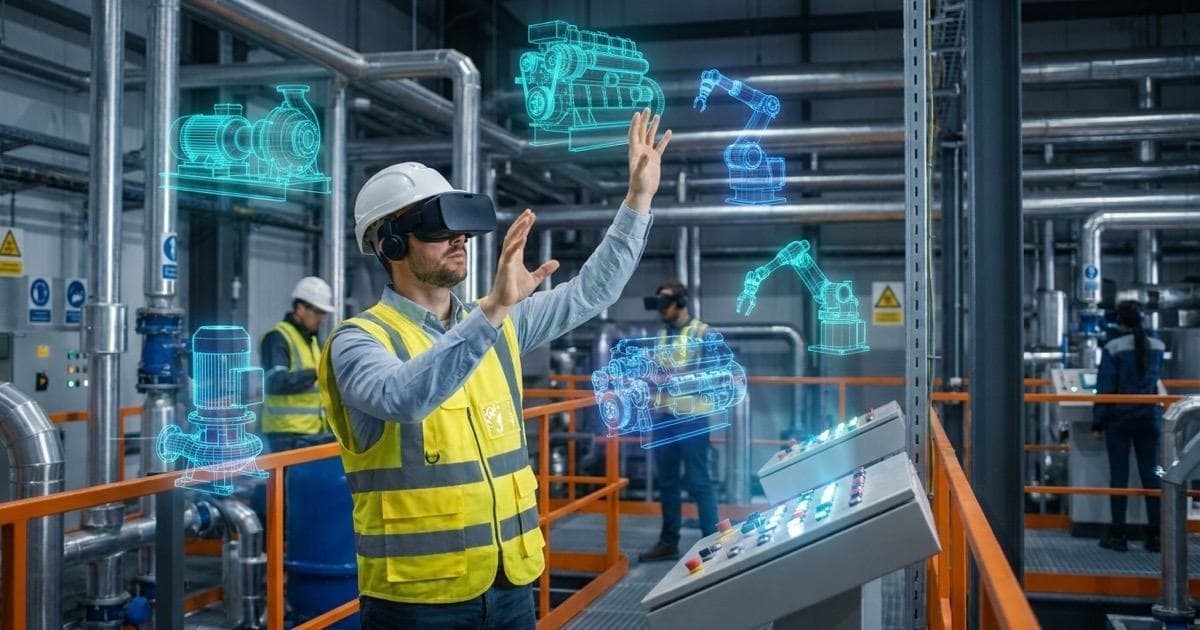
Industrial companies lose millions every year to accidents caused by human error. Traditional safety briefings and classroom training simply can't fully prepare staff to handle hazardous equipment. VR and AR simulators close that gap.
Why VR outperforms classroom training
Research shows that VR-based training lifts material retention by 75% compared to lecture format. The employee doesn't just listen to instructions — they live the situation. Mistakes in VR are safe, but they stick in memory just like real ones.
Three practical use cases
Emergency response drills. A fire on an oil rig, a gas leak, a roof collapse — scenarios that can never be staged in reality for training. A VR simulator lets staff rehearse the correct response dozens of times until it becomes muscle memory.
Complex equipment maintenance. AR instructions overlay real equipment: the technician sees step-by-step prompts through a tablet or smart glasses. Repair time drops by 30–40%.
Work permits. Instead of a paper exam — a hands-on test in VR. The system logs every action and delivers an objective assessment of the employee's readiness.
The business case
Companies that have rolled out VR training report 30–50% fewer accidents in the first year. A simulator typically pays for itself in 6–12 months through reduced downtime, fewer fines and lower insurance claims.
DEQR builds VR and AR solutions for industrial clients in Kazakhstan and the CIS. We create digital twins of equipment and simulators tailored to specific production processes. Contact us for a live demo.
Book a Demo